
HeatShield Chimney Sweep in Palo Alto: A Homeowner’s Guide
A cracked terra cotta flue tile doesn’t mean you need a full liner replacement. But it does mean your chimney is venting combustion gases into the masonry surrounding it, not through it. HeatShield is a UL-listed resurfacing system that seals those cracks and restores the smoke-tight surface without tearing out your existing flue. Most Palo Alto homeowners considering it don’t realize two things: the sweep has to happen first, and the inspection findings determine which HeatShield formulation is correct.
If you’d rather not sort through the details yourself, call (833) 620-7463 and we’ll walk you through what your chimney actually needs.
What HeatShield Actually Does at the Material Level
HeatShield is a cerfractory flue sealant. That’s a ceramic and refractory cement blend engineered to bond directly to existing terra cotta flue tiles. When a chimney professional applies it, the material fills micro-cracks, spalled surfaces, and hairline gaps between tiles, then cures into a smooth, continuous surface. Think of it as restoring the original monolithic smoke-tight seal your flue had when it was first built.
Cracked flue tile is a common finding in Palo Alto homes. We see it frequently in older Eichlers in Greenmeadow and the mid-century builds along the College Terrace corridor. Clay tiles expand and contract with heat cycles over decades, and eventually small fractures appear. Those cracks are the problem. Combustion gases – including carbon monoxide – can escape through them into the chimney chase, the wall cavities, or living space depending on the construction. HeatShield seals those paths.
One point that gets lost in most explanations: this is a repair system, not a coating you can brush on like paint. The material is mixed on site, applied in specific thicknesses, and cured under controlled conditions. That’s why the condition of your flue before application matters so much.
The Difference Between Joint Repair and the Full Resurfacing System
HeatShield comes in two fundamentally different applications, and the inspection determines which one your chimney needs.
HeatShield Joint Repair targets isolated failures. If your flue tiles are otherwise sound but the mortar joints between a few tiles have deteriorated, the technician applies HeatShield cerfractory material specifically at those joints. This restores the seal where gases were finding a path out. It’s the right fix when damage is localized – a single deteriorated joint, a small spall, one cracked area. We typically see this in Palo Alto fireplaces that haven’t been used heavily but have a few decades of age on the tile.
HeatShield Resurfacing System is the full application. When the inspection reveals widespread deterioration – multiple cracked tiles, flaking surfaces, gaps at numerous joints – the technician applies HeatShield across the entire flue surface. Using a specialized application tool that travels through the flue, the material is spread evenly and built to the manufacturer’s specified thickness. The result is a new continuous surface lining the full length of the flue from fireplace to crown.
Here’s what determines which one you need:
- Number of failed joints: One or two failing joints with solid tiles often qualifies for joint repair. Five or six failed joints spread through the flue typically points to resurfacing.
- Tile condition: If the tiles themselves are sound but the joints are the problem, joint repair makes sense. If the tiles have through-cracks or spalling surfaces, resurfacing is the call.
- Inspector findings from a camera scan: We can’t see everything from the top or bottom with a mirror. A video scan shows the full picture and drives the recommendation.
In our experience around Palo Alto, it’s roughly a 60-40 split toward resurfacing once we get the camera in. Homeowners are often surprised by how much deterioration has accumulated inside a flue they’ve used for years. That’s not scare talk – it’s just what decades of heat cycling does to clay tile. If you’re in the Chimney Cleaning Palo Alto home service area, we can show you exactly what your flue looks like before any recommendation is made.
How Much Does HeatShield Cost Compared to a DuraFlex Liner?
The honest answer is that HeatShield resurfacing in Palo Alto typically runs $2,500 to $4,500 depending on flue height and access, while a full DuraFlex stainless liner installation usually lands between $4,000 and $8,000. Those are broad ranges – your specific situation will move those numbers.
Here’s the comparison that matters:
- HeatShield resurfacing: Lower material cost, no liner to pull, faster installation. Best when the existing clay tile structure is mostly intact but the seal has failed. The HeatShield material bonds to what’s there rather than replacing it.
- DuraFlex liner installation: Higher cost, but it’s a brand new continuous stainless steel flue from appliance to termination. Best when tiles are collapsed, severely offset, or when the chimney is being converted for a higher-efficiency gas appliance that needs a properly sized liner.
The deciding factors are structural integrity and intended use. If your flue tiles are cracked but the stack is straight and the masonry is sound, HeatShield is often the right call. If tiles have shifted, collapsed, or the flue was never the right size for the appliance, DuraFlex is the answer. There’s no universal “better” – only what’s correct for your chimney.
One thing we won’t do is recommend HeatShield because it’s easier for us. We stock and install both systems. The inspection determines the recommendation, and we show you the camera footage that backs it up. If you’re weighing repair options in Palo Alto, our Chimney Repair in Palo Alto page covers both systems in more detail.
Why the Sweep Comes First (And What the Inspection Determines)
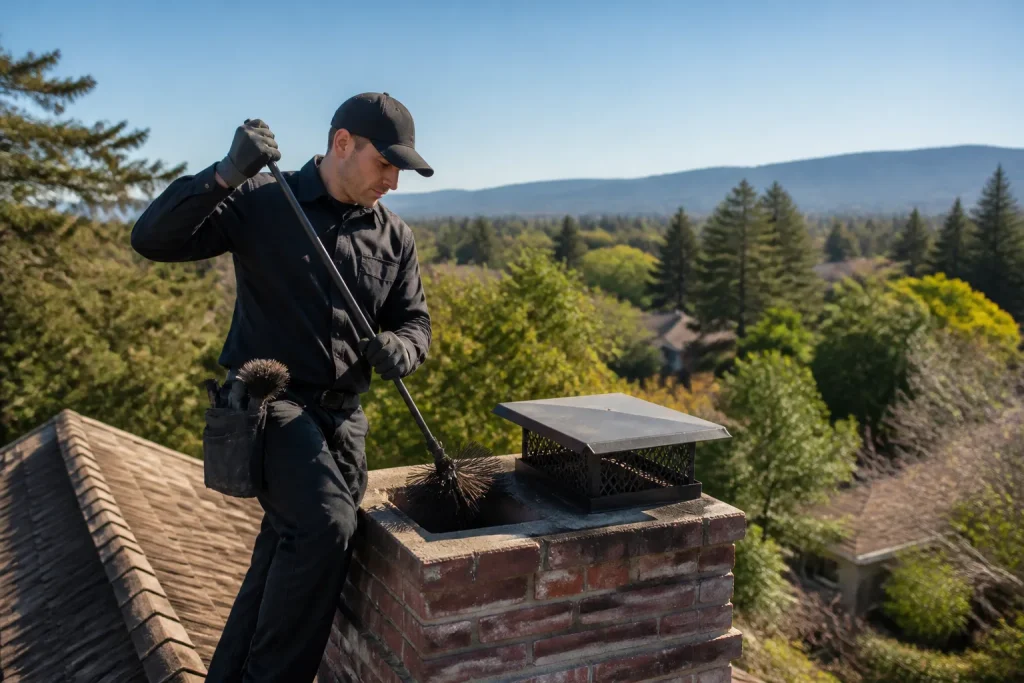
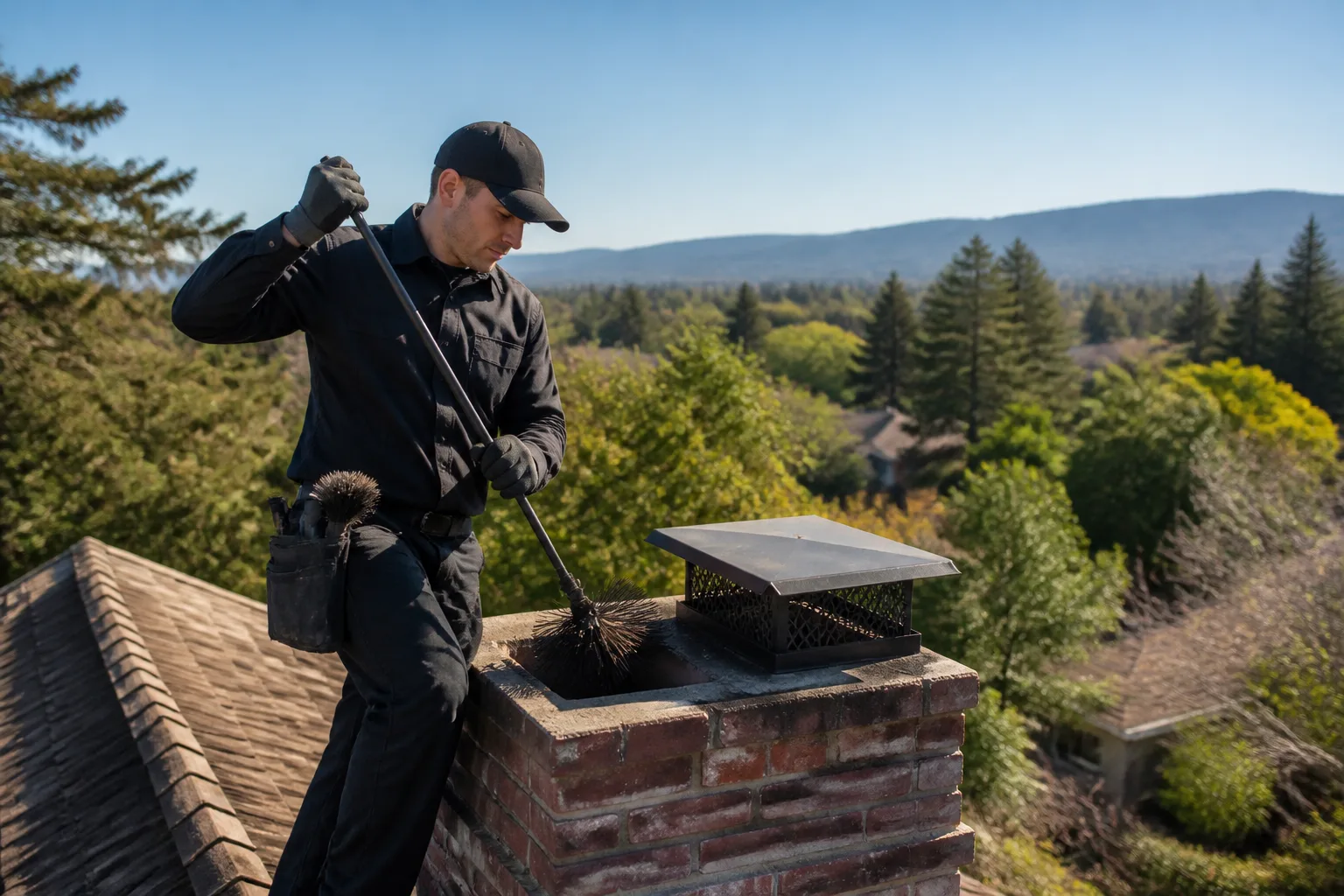
This is the part most Palo Alto homeowners don’t expect. You can’t apply HeatShield to a dirty flue. The cerfractory material needs direct contact with clean tile surface to bond properly. Creosote, soot, and debris prevent that bond. So a full Chimney Sweep in Palo Alto has to happen before any HeatShield application can be considered.
After the sweep, the technician runs a video camera through the flue. This scan is what tells us whether HeatShield is even appropriate, and if so, which formulation. We’re looking for:
- The number and location of cracked or spalled tiles
- Joint deterioration – both how many joints are failing and how deep the failure goes
- Any offset tiles that would make the flue structurally unsuitable for resurfacing
- Evidence of water intrusion or prior fire damage
- Overall flue dimensions and accessibility
That camera scan is non-negotiable. Anyone who quotes you a HeatShield job without first seeing the inside of your flue is guessing. We pulled a video scope out of a flue in Barron Park last month where the homeowner had been told by another company she needed a full liner. The camera showed two failed joints and otherwise solid tile. Joint repair fixed it for less than half what she’d been quoted. That’s what the inspection does.
The same inspection also catches issues that neither HeatShield nor a liner will fix – things like crown deterioration or missing mortar at the top of the chimney. Those get addressed separately, and addressing them at the same time saves a second trip and a second mobilization cost.
What the Installation Process Looks Like from Start to Finish
Knowing what’s coming before the technician arrives makes the whole job less disruptive. Here’s the sequence for a typical HeatShield resurfacing in Palo Alto:
- 1
Initial inspection and quote: We look at the chimney from top and bottom, run the camera, and give you a written recommendation with pricing. This happens before you commit to anything.
- 2
Full chimney sweep: On the day of installation, we sweep the flue completely. Every bit of creosote and soot comes out before any material goes in.
- 3
Application: The HeatShield cerfractory is mixed on site to the correct consistency for your flue’s condition. For resurfacing, a specialized application head travels through the flue spreading material evenly. For joint repair, application is targeted to the failed joints.
- 4
Cure time: HeatShield cures through ambient air and heat cycling. The initial cure takes about 24 hours, and the manufacturer specifies a full cure over the first several burns. We’ll give you a clear timeline before we start.
- 5
Re-inspection after cure: A final camera pass confirms the seal is complete and the flue is ready for use.
The whole installation typically takes one day for joint repair and one to two days for full resurfacing, depending on flue height and access from the roof. Most Palo Alto homes have chimneys accessible from the roof with a standard ladder, but some of the taller two-story builds in the Crescent Park area need additional setup. That’s factored into the quote before you commit.
If you’re also overdue on Dryer Vent Cleaning in Palo Alto, the same visit window often works – we can schedule both while the team is already on site.
Why the UL Listing Matters for Palo Alto Homeowners
HeatShield is UL-listed, which is a specific and meaningful designation. UL (Underwriters Laboratories) is an independent safety certification organization. A UL listing means the product has been tested under controlled conditions and demonstrated specific performance characteristics – in this case, that HeatShield cerfractory material resists temperatures and conditions typical of residential chimney use.
In Palo Alto’s real estate market, that listing does practical work. When you sell a home here, inspectors and buyers’ agents frequently ask about chimney condition. Documentation showing the flue was repaired with a UL-listed resurfacing system is a stronger answer than “we had a guy patch it.” Insurance carriers also respond differently to documented, system-based repairs than to unverifiable hand-patching.
That said, we should be direct about what UL listing doesn’t mean. It doesn’t mean HeatShield is automatically the right fix for every cracked flue. It doesn’t substitute for a proper inspection, and it doesn’t override the physical limitations of your existing masonry. What it does mean is that the material itself has been independently tested, and that’s worth something when you’re dealing with the pathway that vents combustion gases out of your house.
We’ve found that Palo Alto homeowners – especially in neighborhoods with older housing stock like Old Palo Alto and Professorville – are often dealing with chimneys that predate modern building codes. In those homes, the choice between HeatShield and full liner replacement comes up regularly, and the UL listing often tips the decision toward resurfacing when the tile structure is still sound enough to support it.
When to Call a Pro (Instead of Waiting)
HeatShield isn’t a DIY product, and there’s a safety reason for that. Working inside a flue requires training and equipment. The material has to be applied at the right thickness, in the right conditions, with the flue properly prepared. Without the camera scan, you have no idea what you’re actually sealing or whether the flue will perform correctly afterward.
If any of these apply to your Palo Alto home, get the flue inspected before you burn again:
- You’ve noticed flaking tile or debris in the firebox
- The chimney has visible cracks in the exterior masonry
- You smell smoke in the house after the fireplace has been used
- Your chimney is over 30 years old and hasn’t been camera-inspected
- You bought the house with no documentation of prior chimney work
Even without obvious symptoms, an annual sweep plus camera inspection is the standard of care for active fireplaces. Dryer vents carry a similar risk profile and get overlooked even more often – a clogged dryer vent is one of the leading causes of residential fires, and it’s exactly the kind of maintenance that gets skipped until there’s a problem.
Related services in Palo Alto: We handle Chimney Sweep in Palo Alto for annual maintenance, Chimney Repair in Palo Alto for HeatShield and DuraFlex work, and Dryer Vent Cleaning in Palo Alto as a standalone service.
The Bottom Line
HeatShield is a legitimate repair option for cracked flue tile, and it’s often the right call for Palo Alto homes with chimneys that are structurally sound but have lost their smoke-tight seal. The sweep comes first, the camera inspection determines the recommendation, and the UL listing means the material has independent testing behind it. Cost-wise, it occupies the middle ground between doing nothing and full liner replacement – and doing nothing is the one option that keeps venting combustion gases into your masonry.
If you’re in Palo Alto and the fireplace hasn’t been looked at in a while, start with an inspection. We’ll show you the footage and explain what it means before you spend a dollar on repairs. Chimney Cleaning Palo Alto offers free estimates – call (833) 620-7463.
Frequently Asked Questions
HeatShield works on masonry chimneys with terra cotta flue tile liners. It’s designed to bond to clay tile surfaces. It is not appropriate for chimneys with no tile liner, for factory-built metal chimneys, or for flues where the tiles have collapsed or shifted significantly. The inspection tells you whether your flue is a candidate.
HeatShield is designed as a long-term repair, and the manufacturer supports it with a limited lifetime warranty when installed by a certified applicator. The realistic lifespan depends on usage, moisture exposure, and the condition of the underlying masonry. Annual inspection is still recommended, and the warranty is part of why the UL listing carries weight.
In most cases, yes. Older masonry chimneys in Palo Alto are often good candidates for HeatShield because the tile structure is still intact even when the joints have degraded. The camera inspection confirms this before any material is applied. If the inspection reveals structural problems beyond surface cracking, we’ll tell you plainly and recommend the appropriate repair path instead.
No. The material needs the initial 24-hour cure before any fire is lit, and the manufacturer specifies a gradual break-in over the first several burns. We’ll give you a written timeline before installation starts so there’s no guessing. Rushing the cure compromises the seal, and there’s no reason to do that after spending money on the proper repair.
Written by the team at Chimney Cleaning Palo Alto, serving Palo Alto since 2018.
Need Chimney Cleaning Help?
Call Chimney Cleaning Palo Alto - licensed & insured, with free written estimates in Palo Alto.
(833) 620-7463