
Last updated November 2, 2026
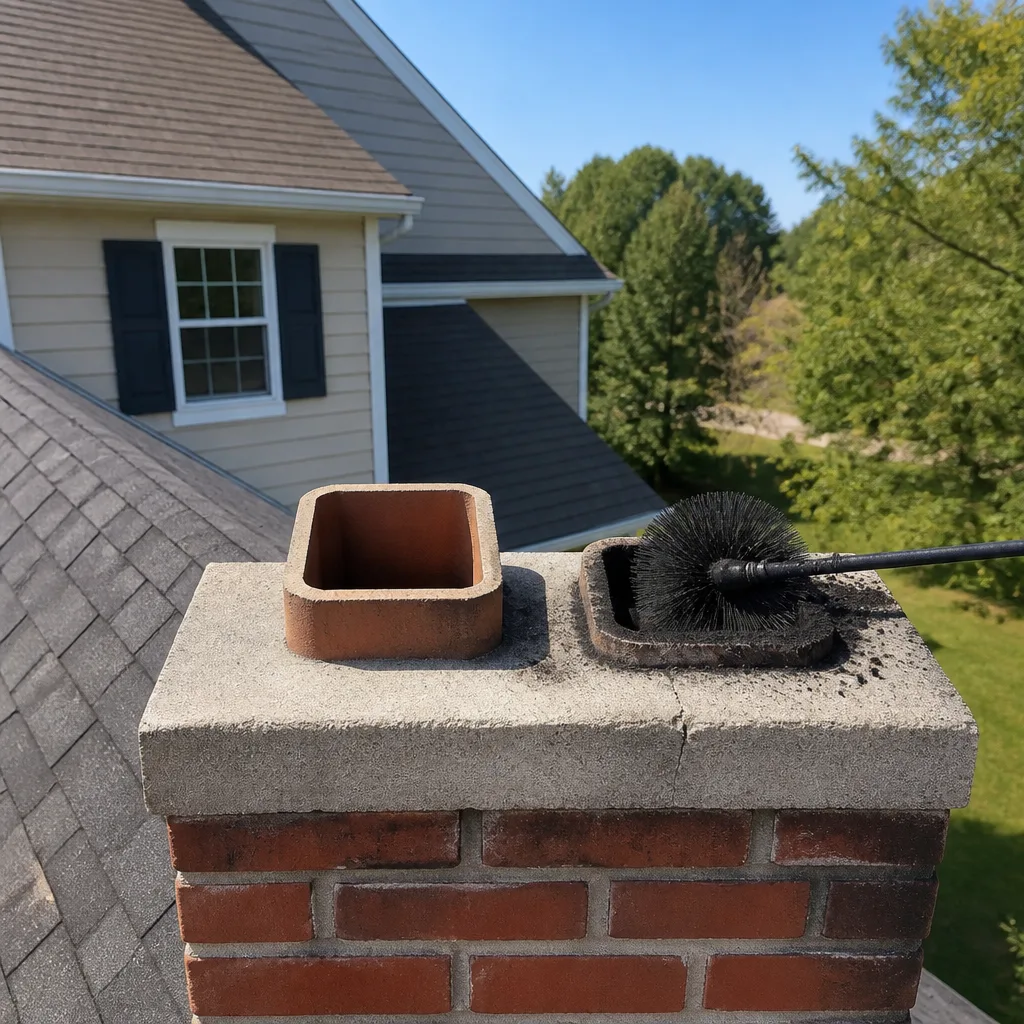 Sweep & inspection
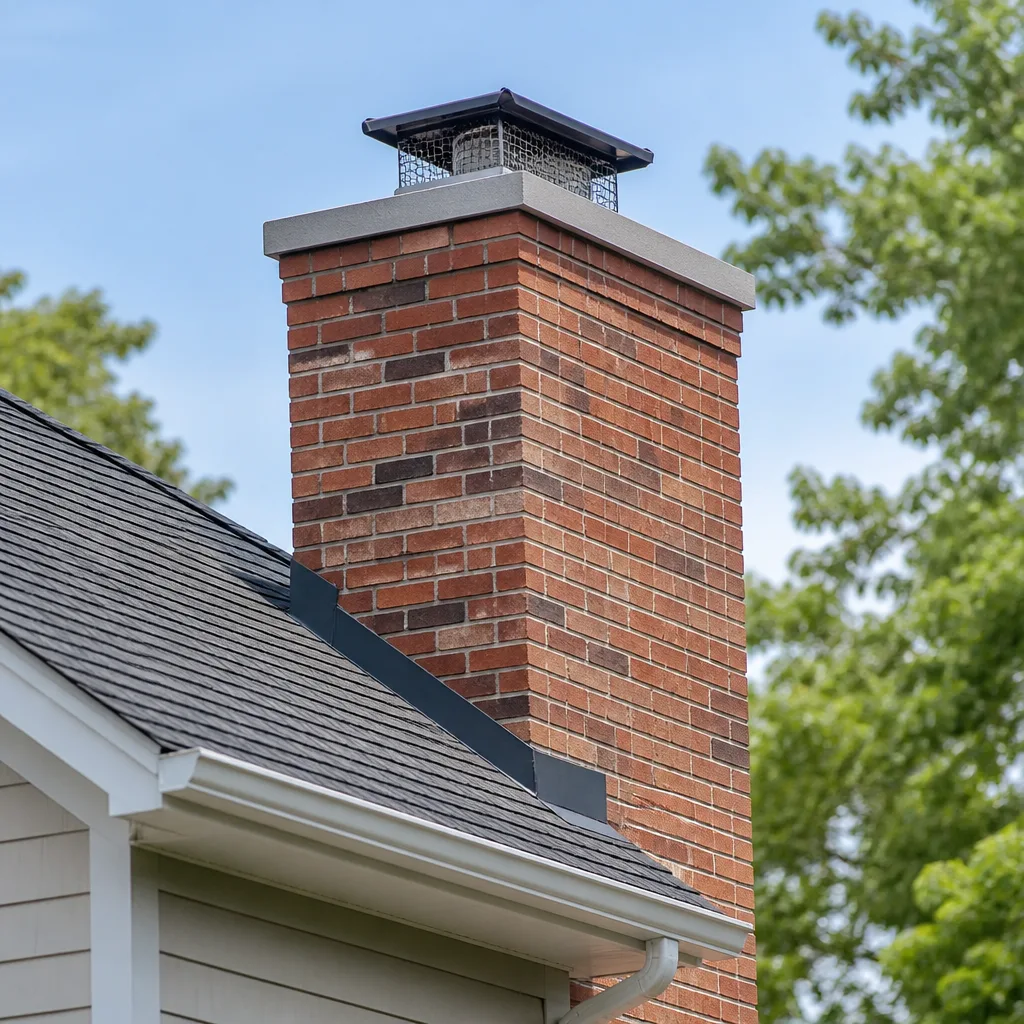 Caps & crowns
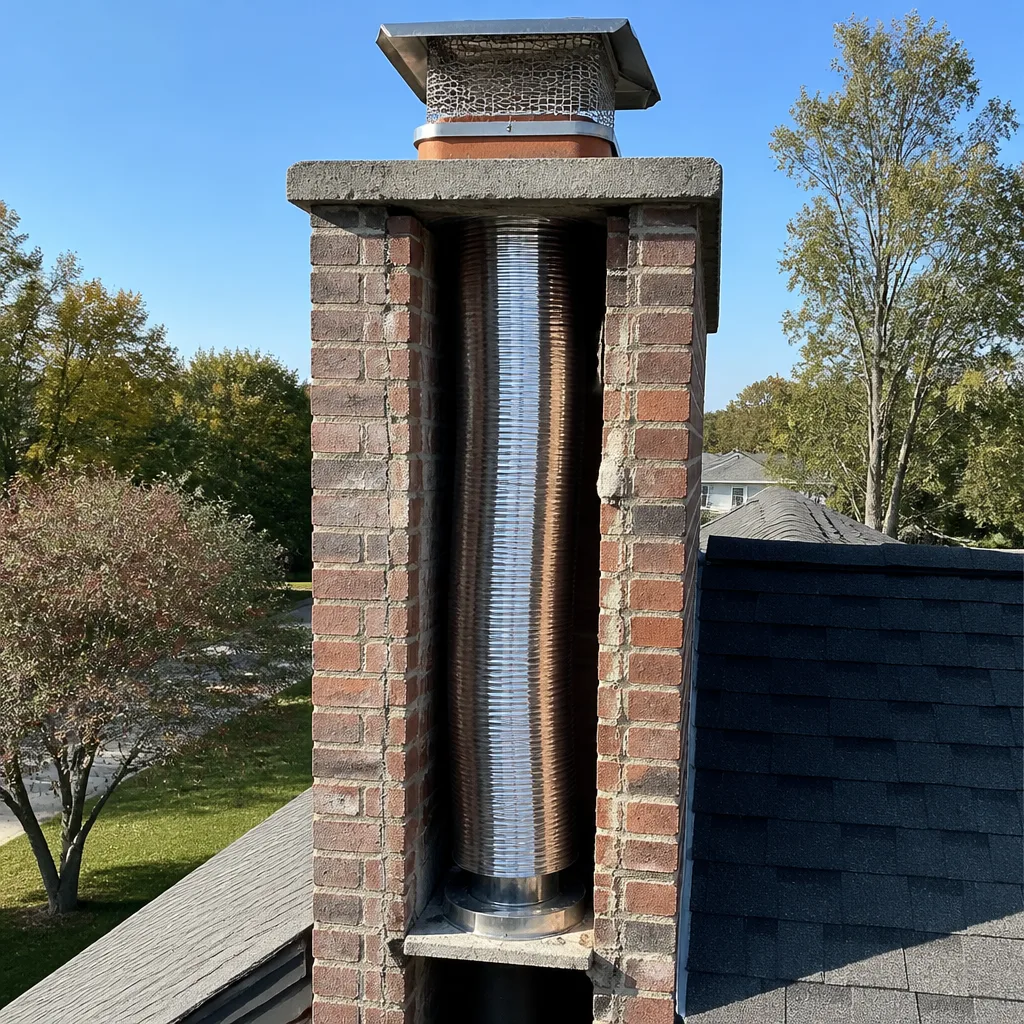 Flue relining
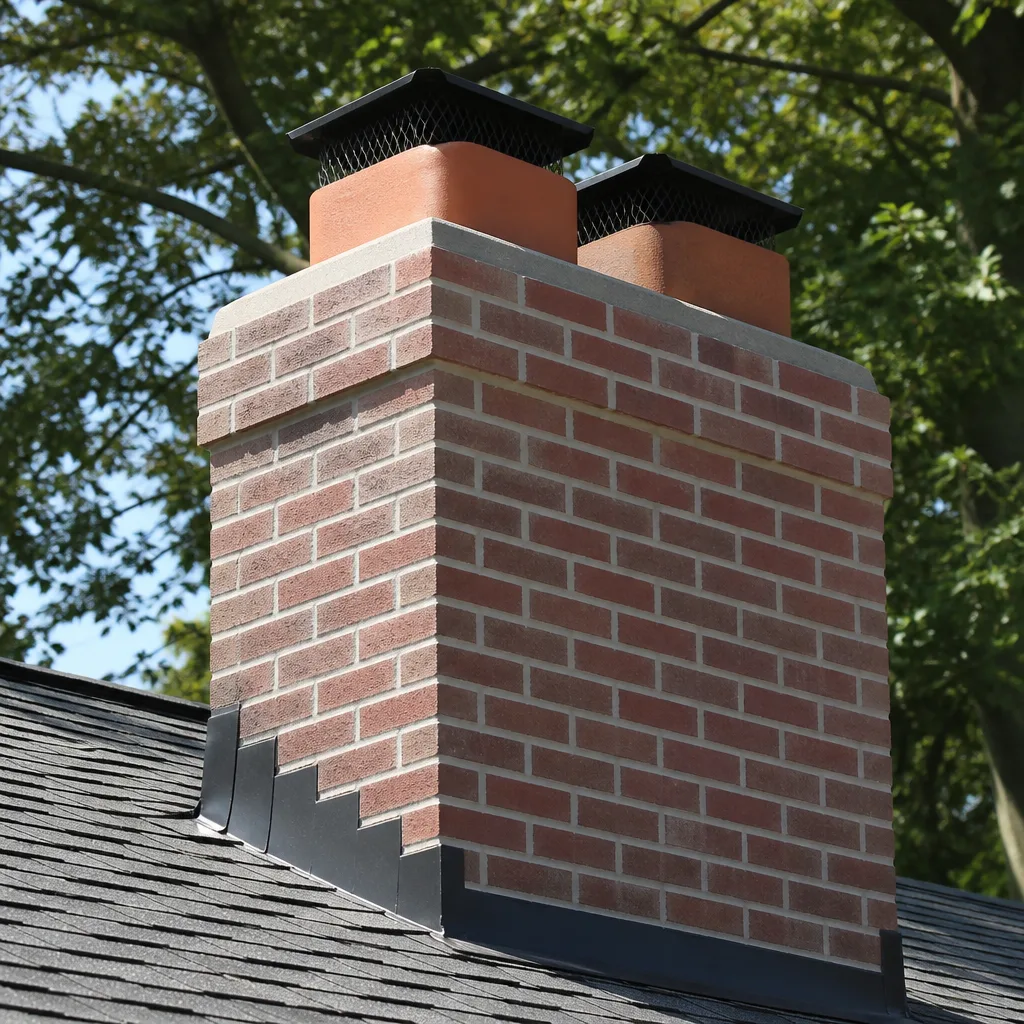 Masonry repair
 Gas fireplace service
Level 1 sweep and inspection to the NFPA 211 annual standard - flue, crown, cap, and flashing checked and photographed
Chimney sweep logs do not sweep chimneys. They loosen some creosote - which then falls where a brush and vacuum still have to collect it.
Chimney Sweep Troubleshooting: Common Problems and How to Fix Them
If smoke rolls into your living room every time you open the damper, getting a sweep won’t help. The problem is almost certainly a pressure or geometry issue, not creosote. Most chimney complaints we hear from Palo Alto homeowners, from stubborn backdraft on Seale Drive to persistent odor in Midtown, trace back to a specific mechanical cause that a brush alone can’t reach. This Complete Chimney Sweep Guide for Palo Alto Homeowners maps each symptom to its actual source, so you stop treating symptoms and start fixing root causes. We’ll walk through what’s happening inside your flue, why it’s happening, and what actually resolves it, whether that’s a five-minute check or a liner repair.
Styles & brands we work with
- Sweep & inspection
- Caps & crowns
- Flue relining
- Masonry repair
- Gas fireplace service
Quick Answer
Most chimney problems fall into four root causes: airflow restriction (creosote, debris, closed damper), pressure imbalance (competing exhaust fans, sealed house envelope), structural damage (cracked flue liner, deteriorated crown), or moisture intrusion (failed cap, damaged flashing). The fix depends on which one you’re dealing with, and mistaking one for another means paying for a sweep that won’t solve anything. Start by identifying the specific symptom, then match it to the cause below.
Table of Contents
- Symptom-to-Cause Matrix: Match Your Problem to the Fix
- Smoke Backdraft: Why Your Chimney Pushes Air the Wrong Way
- Persistent Chimney Odor: Moisture, Creosote, or Animals
- Poor Draw: The Cold Flue, Sealed House, and Competing Fan Problem
- Sweep-Solvable vs. Repair-Required: How to Tell Before You Pay
- Why a Gelco Cap Fixes Downdraft and Moisture Issues
- HeatShield for Hairline Tile Cracks: When It’s the Right Fix
- When to Stop Guessing and Get a Level II Camera Inspection
- Common Mistakes to Avoid
- When to Call a Professional
- Frequently Asked Questions
- The Bottom Line
Symptom-to-Cause Matrix: Match Your Problem to the Fix
Before you spend money on any service, pin down exactly what your chimney is doing. Here’s the matrix we use when a Palo Alto homeowner calls us describing a problem. Match your symptom to the mechanical cause, and you’ll know whether you need a sweep, a repair, or something else entirely.
| Symptom | Most Likely Cause | Fix |
|---|---|---|
| Smoke enters room when fire is lit | Negative pressure in the house, undersized flue, insufficient chimney height | Identify pressure source; may require cap, liner, or air supply adjustment |
| Smoky smell when fireplace not in use | Downdraft carrying creosote odor into home | Install or replace cap; inspect damper seal |
| Musty or damp smell year-round | Moisture intrusion through failed cap, crown cracks, or flashing | Repair or replace cap, crown, or flashing |
| Odor that worsens in humid weather | Creosote off-gassing accelerated by moisture | Sweep to remove creosote, then address moisture source |
| Fire hard to start, weak flame | Cold flue, restricted air supply, or competing exhaust | Prime the flue, check for blockages, identify pressure issues |
| Debris falling into fireplace | Deteriorating flue liner or missing cap | Camera inspection; liner repair or cap installation |
| Animals in chimney | Missing or damaged cap | Remove animal without harm, install proper cap |
Every one of these has a mechanical cause. The hard part is that several symptoms overlap. An odor problem can be moisture, creosote, or animals, and each requires a different fix. That’s why we always start with a visual inspection before recommending anything. You should too.
Smoke Backdraft: Why Your Chimney Pushes Air the Wrong Way
Backdraft is the most alarming chimney problem a homeowner faces, and it’s also the most commonly misdiagnosed. Smoke should flow up because hot air rises, but your chimney only works when the air pressure inside the flue is lower than the pressure in the room. Break that pressure relationship, and the chimney becomes an exhaust pipe pointing the wrong way.
In Palo Alto, where many homes built from the 1950s through the 1980s have seen significant remodeling and sealing, negative pressure is the leading cause of backdraft we encounter. Here’s what creates it:
- Competing exhaust fans: A kitchen range hood running at 600 CFM or a bathroom fan pulling air out of a tight house creates negative pressure. The chimney, being the largest opening, becomes the make-up air source. Smoke gets pulled in instead of pushed out.
- Sealed house envelope: New windows, new doors, added insulation, sprayed foam. All good for energy bills, all bad for natural-draft chimneys. A fireplace needs combustion air from somewhere. If the house can’t provide it, the chimney gets starved.
- Undersized flue: A fireplace with a firebox that’s too large for its flue diameter will always struggle. The flue can’t move enough air volume to carry smoke up and out.
- Height deficit: A chimney shorter than the roof peak, or shorter than nearby structures or trees, will encounter turbulent air that pushes smoke back down. This is common in Palo Alto neighborhoods where mature redwoods and oaks tower over rooflines.
The fix depends on which of these applies. For pressure problems, the answer is often a mechanical draft solution or an air supply adjustment. For geometry problems, it’s a chimney extension or a properly designed cap. None of these are solved by sweeping. That’s the key point: a clean chimney that backdrafts is still a backdrafting chimney.
If you’re in Palo Alto and your chimney smoke reverses direction on windy days, check what else is running in the house. Turn off exhaust fans, crack a nearby window, and see if the draft improves. If it does, you’ve identified the cause.
Persistent Chimney Odor: Moisture, Creosote, or Animals
Chimney odor falls into three distinct categories, and each has a different source. Treating the wrong one wastes time and money. Here’s how to tell them apart.
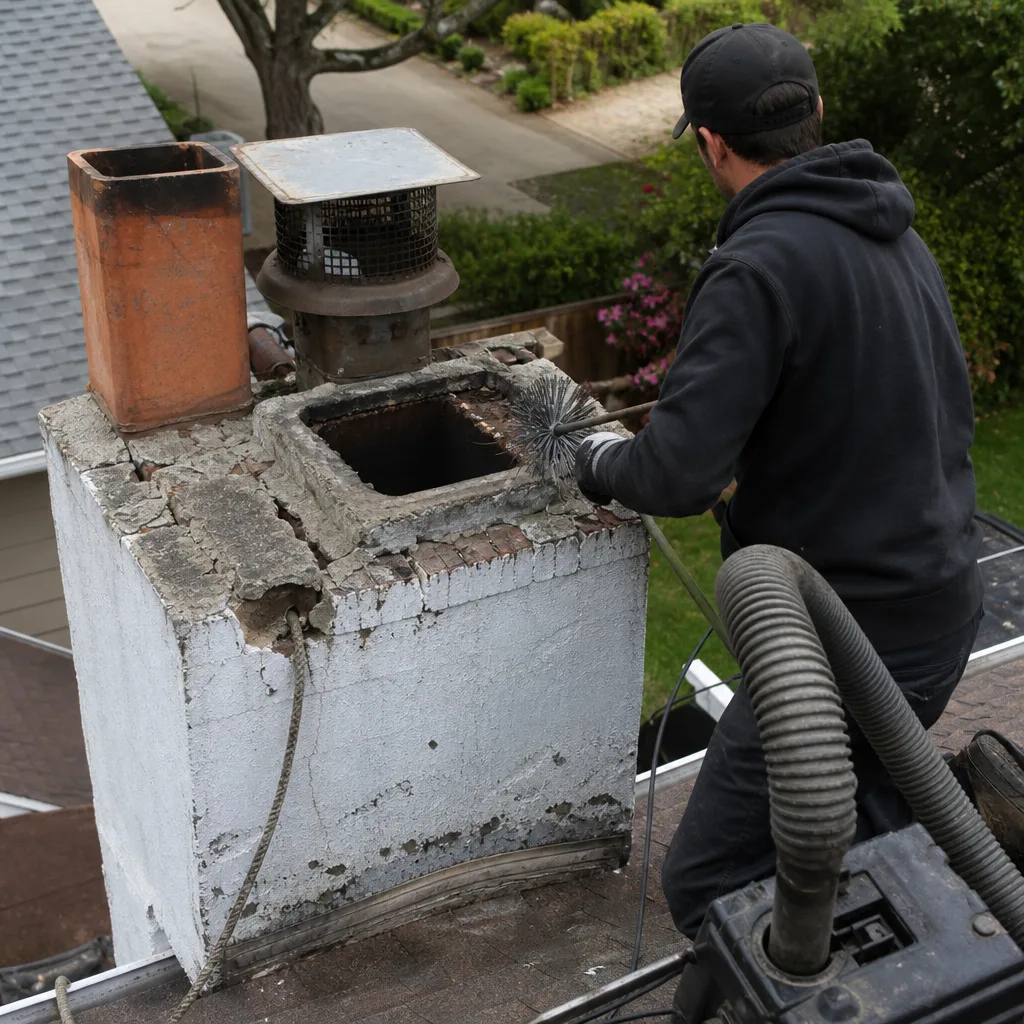
Creosote off-gassing smells sharp, acrid, like a cold campfire. It intensifies in humid weather because moisture activates the odor compounds trapped in the creosote. The fix is straightforward: a professional chimney sweep removes the creosote, and the smell goes away until enough new creosote accumulates to cause it again. If you burn wood regularly in Palo Alto, annual sweeping prevents this from becoming a recurring problem.
Moisture intrusion smells musty, damp, like a wet basement. It doesn’t depend on whether you’ve burned recently. It comes from water entering the flue through a failed cap, cracked crown, or compromised flashing. The fix is not a sweep. It’s repairing the point of entry. We’ve seen Palo Alto homeowners pay for a sweep to address a musty smell, only to have the odor return in three weeks because the crown was still cracked. The sweep removed the symptom, not the cause.
Animal intrusion comes with specific evidence: scratching sounds, droppings, nesting material visible at the damper, or a decomposing smell if an animal has died in the flue. In Palo Alto, we regularly deal with squirrels, roof rats, and birds nesting in uncapped chimneys. The fix is humane removal followed by cap installation. A sweep removes nesting material, but without a cap, the problem recurs next season.
The diagnostic sequence we use: first determine whether the odor is combustion-related (creosote) or moisture-related (musty). Then check the cap and crown for visible damage. Then schedule the appropriate fix. This sequence prevents paying for services that don’t address the actual problem.
Poor Draw: The Cold Flue, Sealed House, and Competing Fan Problem
Poor draw is the most common chimney complaint in Palo Alto, and it’s the one most resistant to a sweep-only solution. A fire that starts reluctantly, burns weakly, or produces smoke that lingers at the firebox opening usually points to one of three issues.
Cold flue: A cold chimney contains a column of dense air that resists movement. When you light a fire, the hot flue gases have to push against that cold plug. The result is a smoky startup that improves as the flue warms. In Palo Alto’s mild climate, flues stay cooler than in colder regions, which means this startup problem is more common. The fix is priming: roll up a few sheets of newspaper, light them, and hold them near the open damper for 60 seconds before lighting the main fire. This creates a warm air column that establishes draft immediately.
Sealed house: We covered this above, but it bears repeating because it’s so prevalent in Palo Alto. Homes weatherized for energy efficiency starve natural-draft fireplaces. If you’ve replaced windows or doors in the past five years, and your fireplace performs worse now than it did before, the house envelope is likely the culprit. The long-term fix is a combustion air source, but the immediate test is cracking a window near the fireplace and observing whether performance improves.
Competing exhaust: The kitchen exhaust hood is the usual suspect. A powerful range hood running during a fire creates negative pressure that fights the chimney. The test is simple: turn off all exhaust fans and see if the draw improves. If it does, you’ve found your problem. The fix is either behavioral (don’t run the range hood during a fire) or mechanical (install a make-up air system).
Sweep-Solvable vs. Repair-Required: How to Tell Before You Pay
This is the distinction that saves Palo Alto homeowners money. A sweep removes creosote and debris from the flue. It does not fix geometry, pressure, or structural problems. Here’s how to classify your issue before you schedule anything.
Sweep-solvable problems:
- Creosote accumulation: dark, tarry, or flaky buildup inside the flue
- Debris blockage: leaves, twigs, nesting material blocking airflow
- Mild off-gassing odor: acrid smell that clears after a professional cleaning
- Reduced draw from accumulated soot: gradual performance decline over a burning season
Repair-required problems:
- Backdraft from pressure or geometry issues: a sweep will not change air pressure
- Moisture odor: a sweep removes creosote but does not seal a cracked crown
- Debris falling into the fireplace: indicates a deteriorating flue liner, which a sweep cannot fix
- Persistent animal intrusion: requires cap installation, not just nest removal
- Visible cracks in the chimney crown or flue tiles: structural damage
Here’s the diagnostic sequence we recommend, step by step:
- Identify the specific symptom using the matrix above.
- Look for visible damage: cracks in the crown, missing cap, deteriorating mortar joints.
- Run the simple tests: window-crack test for pressure, exhaust-fan test for competing airflow.
- If the problem is creosote or debris, schedule a sweep.
- If the problem is structural, schedule a Chimney Repair in Palo Alto.
Knowing which category you’re in before you call prevents paying for a service that won’t solve the problem. It also means you can describe the issue accurately when you schedule, which helps the technician come prepared.
Why a Gelco Cap Fixes Downdraft and Moisture Issues
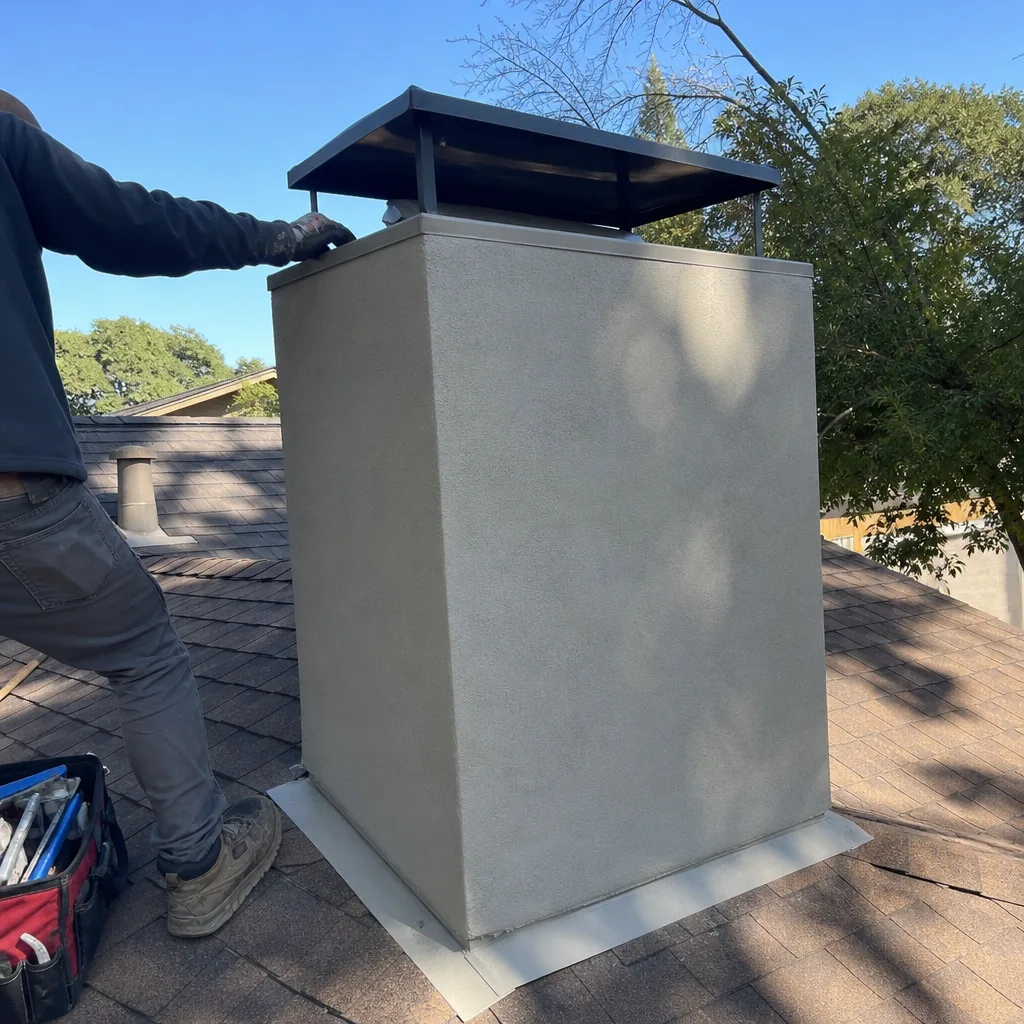
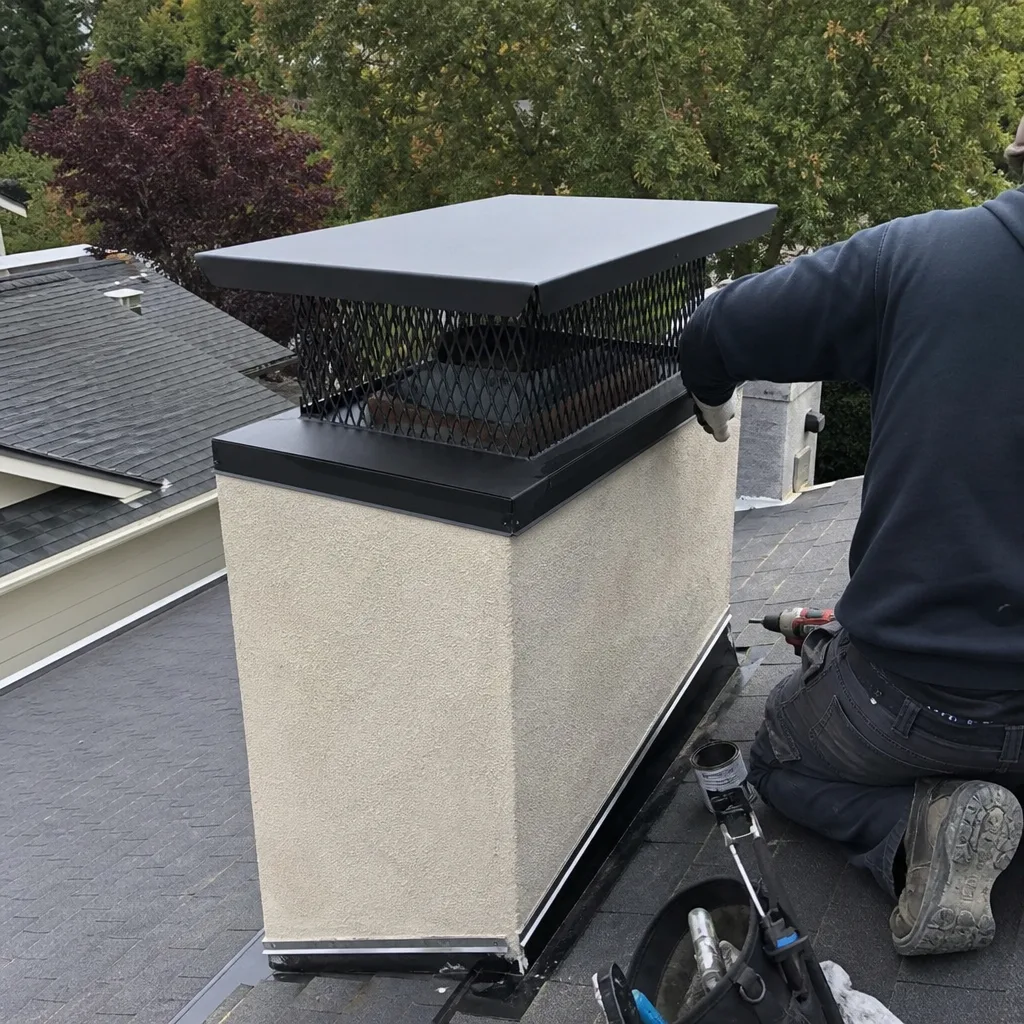
A properly designed chimney cap does more than keep rain out. It manages the airflow dynamics at the top of the flue, which directly affects draft performance. This is where material quality matters, and why we stock Gelco caps rather than relying on whatever’s available at the hardware store.
Gelco caps are engineered for specific flue sizes and configurations. The cap’s geometry creates a stable air pressure zone at the flue exit, which reduces the turbulence that causes downdraft. When wind hits a roofline, it creates eddies and pressure zones that can push air down an unprotected flue. A well-designed cap disrupts that pattern, allowing smoke to exit cleanly regardless of wind direction.
For Palo Alto homeowners dealing with intermittent backdraft on windy days, a cap replacement is often the single most effective fix. We’ve installed Gelco caps on chimneys that had backdrafted for years, and the problem resolved immediately. The cap changed the pressure dynamics at the flue exit.
Moisture is the second problem a Gelco cap solves. Rain entering through an unprotected flue mixes with creosote to create an acidic slurry that attacks flue tiles and mortar joints. Over time, this is what causes the hairline cracks that lead to odor intrusion and, eventually, liner failure. A cap prevents the water from entering in the first place, which preserves the liner and prevents the moisture odor that sends so many Palo Alto homeowners looking for a sweep that won’t help.
We use Gelco caps because they’re built from stainless steel and sized precisely to the flue. The difference between a precise cap and a generic one is the difference between a draft solution and a new problem. Ill-fitting caps create their own turbulence and can restrict airflow.
HeatShield for Hairline Tile Cracks: When It’s the Right Fix
Hairline cracks in clay flue tiles are among the most common findings on a Level II camera inspection. They’re also among the most over-treated and under-treated conditions in chimney work. Some contractors recommend full liner replacement for any visible crack. Others dismiss cracks as minor wear. The truth is in the middle, and HeatShield gives us a third option: resurfacing.
Here’s what hairline tile cracks actually do. They allow smoke and creosote vapor to seep through the flue wall into the chimney cavity. From there, the odor can penetrate interior wall spaces and enter living areas. The smoke itself doesn’t enter the house directly, but the smell does. That’s why a chimney can pass a visual inspection yet still produce persistent odor in the living room.
HeatShield addresses this by resurfacing the flue interior with a ceramic coating that seals hairline cracks and restores a smooth, continuous surface. The process works like this:
- A camera inspection confirms the cracks are superficial, not structural.
- The flue is cleaned to remove all creosote and soot.
- HeatShield material is applied in layers, filling and sealing the cracks.
- The finished surface is smooth, continuous, and resistant to future deterioration.
The advantage over full liner replacement is cost and speed. A full reline with a DuraFlex system is the right choice for severely cracked or improperly sized flues. But for hairline cracks caught early, HeatShield resurfacing restores the flue at a fraction of the cost. This is a capability most chimney companies in the Palo Alto area don’t offer, which means homeowners get told they need a full liner replacement when a resurfacing would do the job.
If you’re dealing with unexplained chimney odor and your last inspection showed hairline tile cracks, this is the fix to ask about. We stock HeatShield materials because they give us an option between doing nothing and replacing everything, and that middle option is often the right answer.
When to Stop Guessing and Get a Level II Camera Inspection
There’s a point in every troubleshooting process where guesswork stops being productive. You’ve run the tests, you’ve eliminated the obvious causes, and the problem persists. That’s the moment to stop diagnosing from the living room and look inside the flue with a camera.
A Level II camera inspection is the standard we use when:
- Odor persists after a professional sweep
- Debris has fallen into the fireplace, indicating internal deterioration
- The home has experienced a chimney fire, even a small one
- A property is changing hands and the chimney’s condition is unknown
- Performance has declined over time without an obvious cause
- Animals have been in the chimney, potentially damaging the liner
The camera sees what a visual inspection from the roof or firebox cannot: the condition of flue tiles throughout the entire length, the presence of gaps or separations, the accumulation of creosote in inaccessible areas, and the condition of the smoke chamber. In our experience serving Palo Alto homes, camera inspections routinely reveal issues that were invisible from either end of the chimney.
The value of a camera inspection is certainty. It tells you whether your problem is creosote, structural, or both. It documents the condition of your flue for insurance and resale purposes. And it prevents paying for a guess. When a Palo Alto homeowner calls us with a chimney problem they can’t solve, our first recommendation after the initial visual check is a camera inspection. It’s the fastest path from symptom to fix.
For a complete picture of your chimney’s condition, the inspection we perform covers all the areas covered in our Chimney Sweep in Palo Alto service criteria, including the flue interior, smoke chamber, damper, and cap. That’s the standard.
Common Mistakes to Avoid
- Paying for a sweep when the problem is structural: A sweep removes creosote. It does not seal cracks, fix pressure issues, or repair a crown. If your problem is moisture or backdraft, a sweep is wasted money. Identify the cause first.
- Ignoring a missing cap because “it’s been fine for years”: Every rain event without a cap adds moisture to the flue and accelerates liner deterioration. The damage is cumulative and invisible until it’s expensive.
- Using DIY chimney cleaning logs as a substitute for professional sweeping: These logs loosen some creosote but don’t remove it. The loosened material can fall and block the flue, creating a worse problem than the one you were trying to solve.
- Sealing the house without addressing combustion air: Every energy-efficiency upgrade to your Palo Alto home changes the pressure relationship with your chimney. If you replace windows or add insulation, expect to address airflow.
- Running powerful exhaust fans during a fire: The range hood is the biggest offender. It pulls air out of the house faster than the chimney can replace it, and smoke reverses direction.
- Delaying a camera inspection because it costs money: A camera inspection costs less than most incorrect repairs. It’s the cheapest way to know exactly what you’re dealing with.
- Burning unseasoned wood: Wet wood produces more creosote per fire than dry wood. In Palo Alto’s damp winter months, wood stored uncovered absorbs moisture. Burn only wood seasoned for at least six months and stored under cover.
When to Call a Professional
Some chimney problems are safe to troubleshoot on your own. Identifying whether your issue is pressure-related or creosote-related costs nothing. But certain scenarios call for professional attention. If you see debris falling into the fireplace, schedule a camera inspection immediately, that indicates internal deterioration. If you smell a persistent odor that a sweep hasn’t resolved, the cause is likely structural. If your chimney backdrafts despite open windows and inactive exhaust fans, the flue geometry needs professional evaluation. And if you’ve experienced any chimney fire, no matter how small, the liner needs a professional assessment before you burn again. For more guides & resources, explore our blog, or call Chimney Cleaning Palo Alto at (833) 620-7463 for a free estimate.
Frequently Asked Questions
A diagnostic visit typically runs between $89 and $150 depending on the complexity of the inspection required. If a camera inspection is needed, expect $150 to $300 for the full Level II evaluation. Exact pricing depends on your chimney’s configuration and accessibility, so call (833) 620-7463 for a quote specific to your Palo Alto home.
You can diagnose backdraft yourself by running the tests described above, cracking a window, turning off exhaust fans, and observing whether the draft improves. The fix, however, usually requires professional intervention. Pressure problems may need a mechanical draft solution, and geometry problems may need a cap or flue extension. The diagnostic steps are free. The fix isn’t DIY.
For wood-burning fireplaces used regularly during the burning season, once per year is the standard recommendation. If you burn more than three cords per season, or if you burn unseasoned wood, you may need a mid-season sweep. Gas fireplaces require less frequent cleaning but should still be inspected annually. The National Fire Protection Association recommends annual inspection regardless of fuel type.
A sweep removes creosote and debris from the flue. An inspection evaluates the structural and functional condition of the whole chimney system, including the flue liner, smoke chamber, damper, crown, and cap. A Level I inspection accompanies every professional sweep. A Level II camera inspection goes deeper when problems are suspected or when a property changes hands.
Not necessarily. Hairline cracks that are caught early can often be resurfaced with HeatShield, which seals the cracks and restores a smooth flue interior at a fraction of the cost of full liner replacement. A camera inspection determines whether your cracks qualify. If the damage is advanced or the flue is improperly sized, a full reline with a DuraFlex system is the right choice. We tell you what we found, show you why it matters, and fix it with materials built to last.
Most homeowner’s policies cover chimney damage caused by sudden events like lightning strikes or chimney fires, subject to your deductible. Damage from gradual deterioration, moisture intrusion, or lack of maintenance is typically excluded. That’s why annual inspection matters, it catches the gradual problems before they become expensive claims. Call your insurer with specific questions about your policy.
The Bottom Line
Every chimney problem has a specific mechanical cause, and matching the symptom to the cause is the difference between a lasting fix and a recurring frustration. Smoke backdraft means pressure or geometry, not creosote. Persistent musty odor means moisture, not a dirty flue. Falling debris means liner deterioration, not loose soot. Run the simple diagnostic tests, know when a sweep will help and when it won’t, and get a camera inspection when the answer isn’t obvious. For Palo Alto homeowners who want the whole venting system evaluated, we handle chimney sweeping, chimney repair, and Dryer Vent Cleaning in Palo Alto under one company. For the chimney itself, start with the Chimney Cleaning Palo Alto home service page to understand the full scope of what a professional evaluation covers.
Written by the team at Chimney Cleaning Palo Alto, serving Palo Alto since 2018.
See the difference
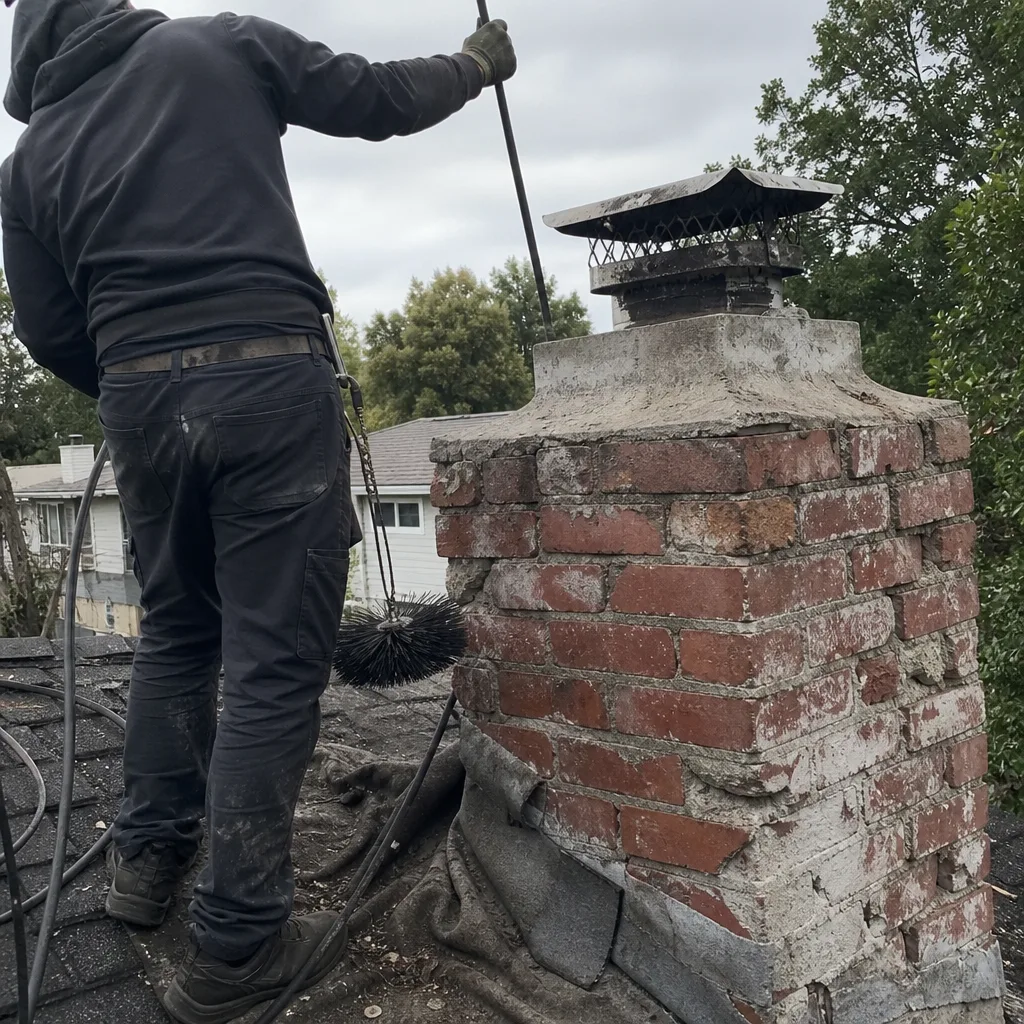 Before
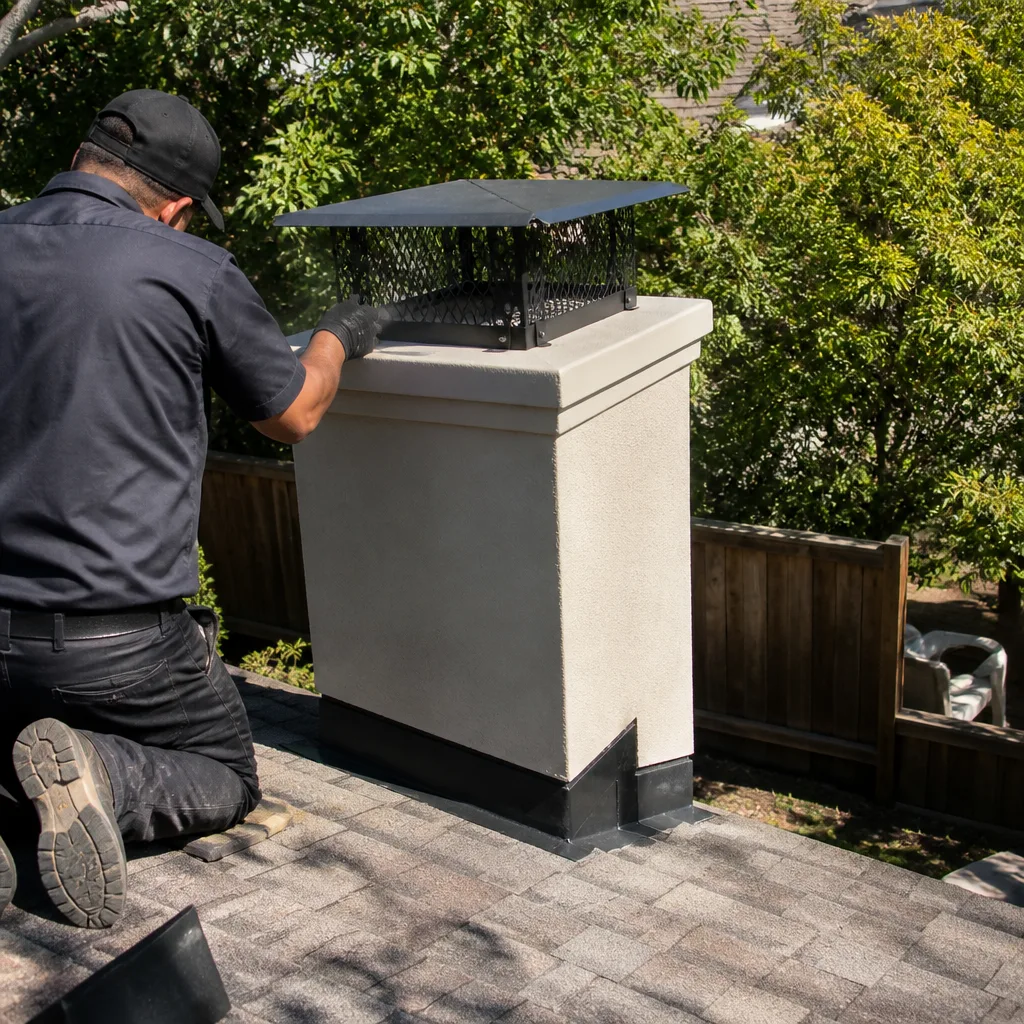 After
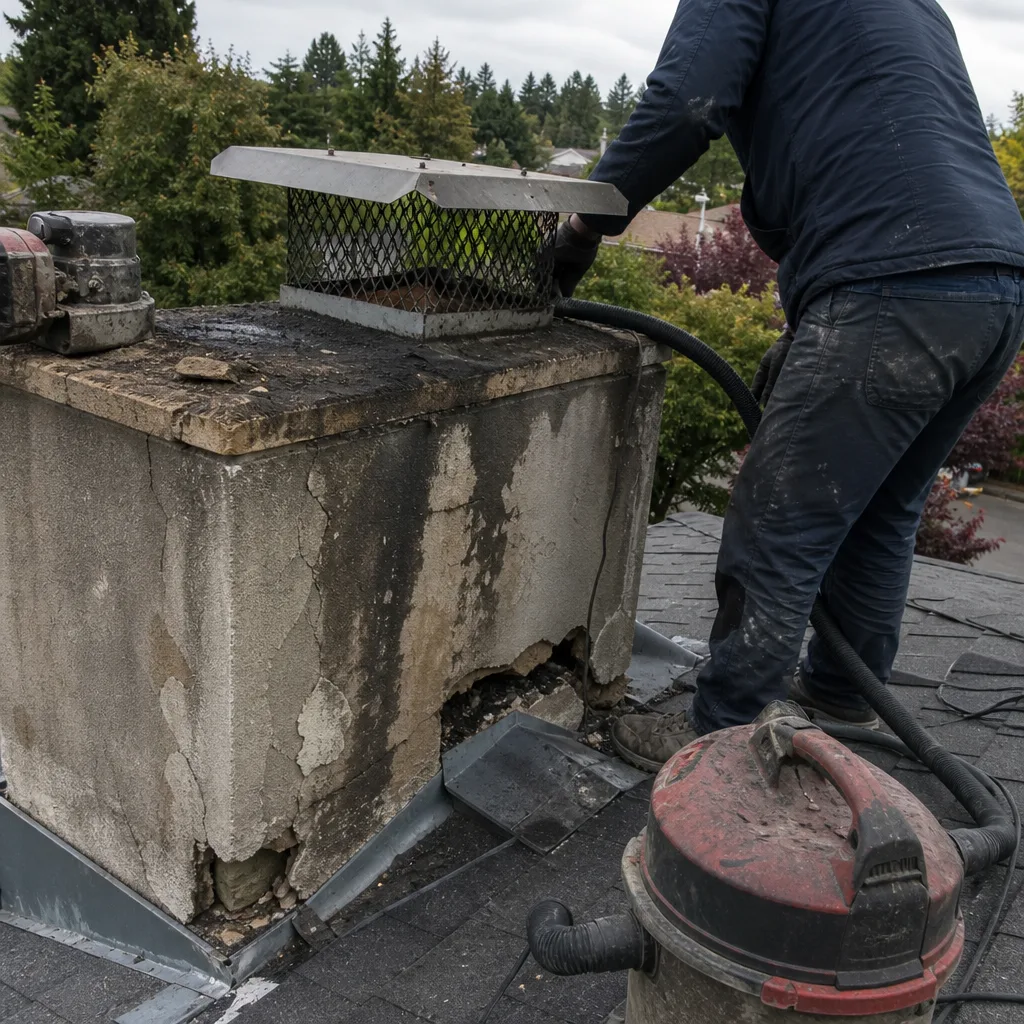 Before
 After
 Before
 After